
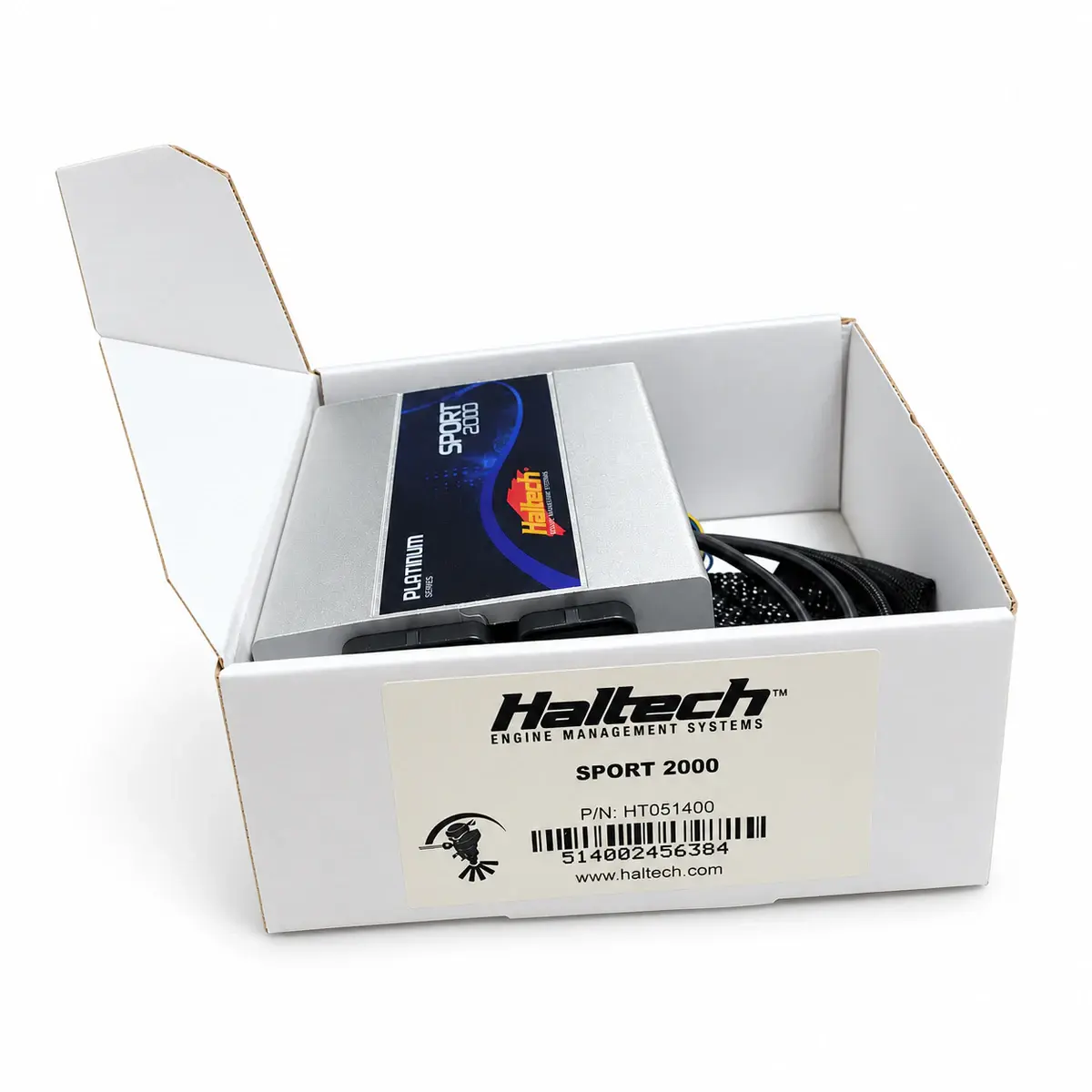
 Controller
Haltech Platinum Sport 2000
$907.23–1,002.74
Haltech Platinum Sport 2000 allows up to 12 injection and 6 ignition function assignments, with some physical pins shared. Check against the engine control strategy.
Controller
Haltech Platinum Sport 1000 provides 4 injection outputs, 4 ignition outputs and 32×32 calibration tables. Check against the engine control strategy.
Reference prices vary with exchange rates and the supplied package. Contact customer service to confirm the price, shipping and taxes.
01 / About Platinum Sport 1000
Platinum Sport 1000 is a legacy standalone ECU using Haltech ECU Manager. Its 4 injector and 4 ignition outputs support multiple engine strategies, while 32 × 32 fuel maps, internal logging and idle / boost functions provide a platform for a fully planned engine conversion.
32 × 32 mapping with adjustable load and RPM axes.
Haltech ECU Manager configuration through USB.
Assign injection, ignition and auxiliary control strategies according to the physical pins.
Onboard and laptop logging with configurable sensor inputs.
02 / Specifications
03 / Package contents
The actual supplied contents are confirmed in the itemized quote. Check the following items before payment.
Ask whether the controller comes with loose connectors and terminals or a complete loom, and whether a PC cable is supplied.
04 / Fitment & installation: Haltech Platinum Sport 1000
Check the model, hardware revision and connector pins against the device’s wiring diagram.
Use the exact ECU wiring diagram; verify every circuit for continuity and shorts before connecting power.
Use the matching Platinum Sport pin allocations and fuse / relay drawing. A base map is a starting point and must be checked against the actual injectors, coils and trigger system.
Use an appropriate ignition amplifier for passive coils. Check shared IGN / INJ / DPO assignments and the 800 mA DPO limit against the official pin table.
05 / Questions about Platinum Sport 1000
Platinum uses ECU Manager with matching platform firmware, not Elite or Nexus software packages.
No. There are 4 ignition outputs. Higher cylinder-count applications depend on distributor or wasted-spark arrangements and the available injector strategy.
Sport 1000 has four injector and four ignition outputs. Sport 2000 has up to twelve injector and six ignition assignments, including shared pins that cannot operate together.
A wideband sensor needs a compatible external controller. The ECU oxygen input reads the measurement; it does not control heater or pump-cell current.
Table dimensions describe load and RPM breakpoints, not power, displacement or a completed engine calibration.
No. Optional injector, ignition and auxiliary functions may share physical pins and cannot drive separate loads simultaneously. Allocate each pin for the exact model before counting spare channels.
No. Coils without built-in igniters require external power igniters or CDI. ECU ignition outputs control the power stage, not coil operating current.
No. Each DPO is a ground-switching output rated at up to 800 mA. Use it to control a suitable relay or power stage; a large pump needs a separately fused power circuit.
Many may be used if their signal type, voltage range and calibration match the ECU input. Confirm the air/coolant thermistor curve, TPS endpoints, pressure scale and trigger pattern separately; retaining the connector does not establish the calibration.
Load can use TPS throttle position or MAP manifold pressure. Choose for the intake and engine behaviour, then configure compensations; TPS load still requires other sensors to be checked.
No. Once the internal logging channels and triggers are configured, the ECU can save logs independently. Download them later through ECU Manager. Channel count and sampling rates determine the available recording duration.
No. Idle, boost, VVT and fans each use I/O, sometimes shared. List functions that must operate together before assigning channels.
06 / Manuals & resources
EXPLORE / Related products
ControllerHaltech Platinum Sport 2000 allows up to 12 injection and 6 ignition function assignments, with some physical pins shared. Check against the engine control strategy.
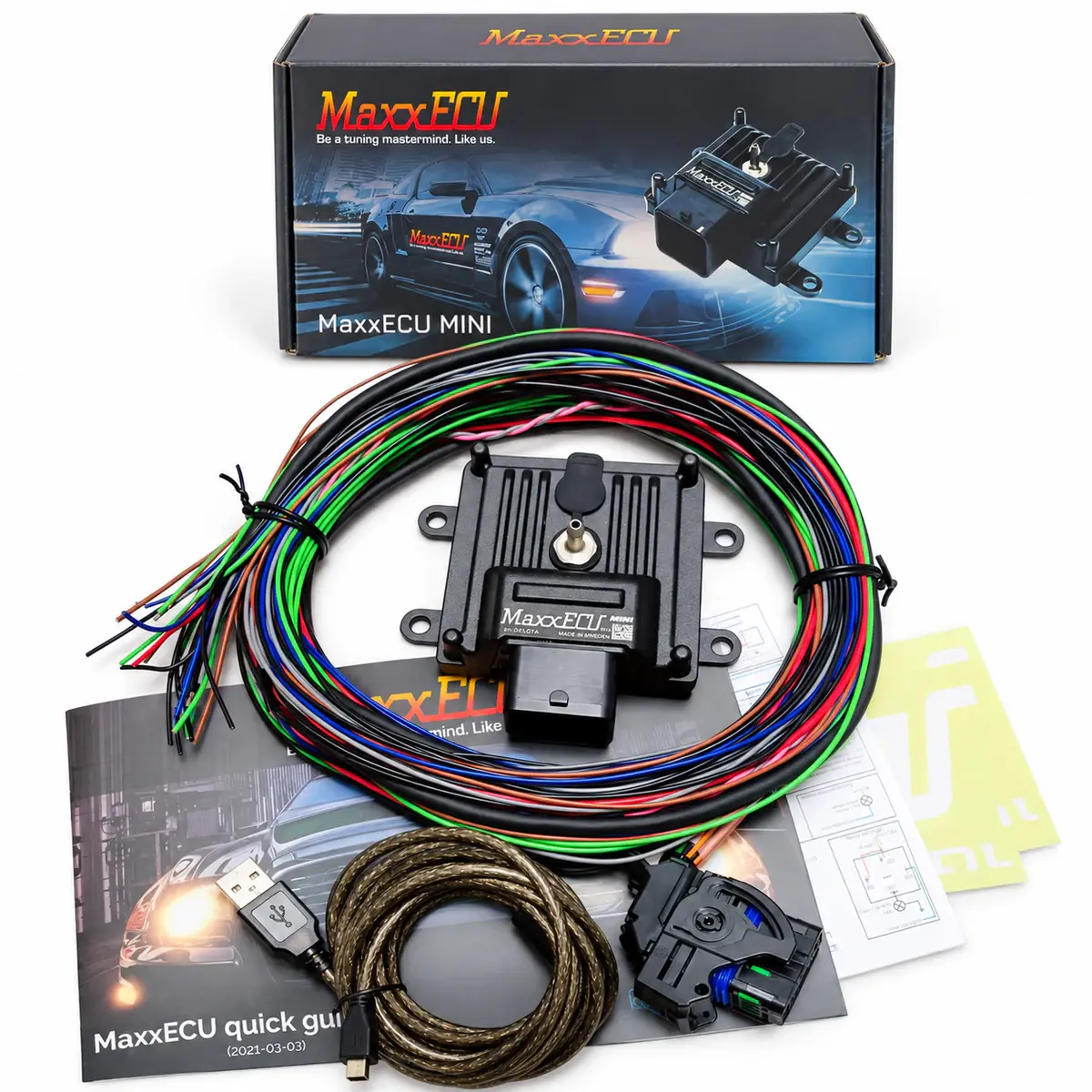 Controller
Compact standalone ECU with fully sequential four-cylinder control, built-in MAP and data logging.
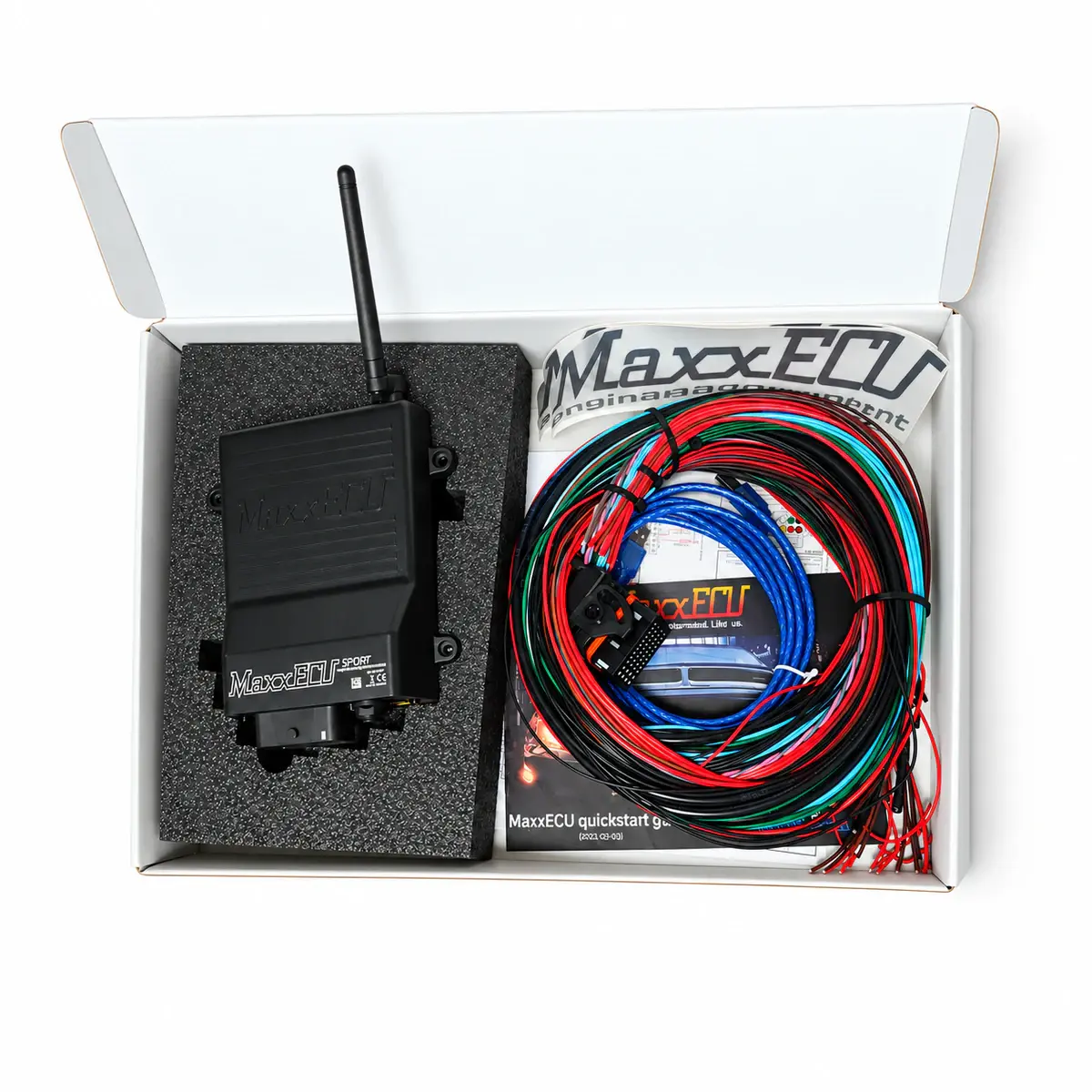 Controller
Standalone ECU with fully sequential six-cylinder control, high- and low-impedance injector support, internal wideband oxygen control and electronic throttle.